17 Jun 2026
Transaction Velocity Reshaping Resource Allocation Among Mobile Slot Developers

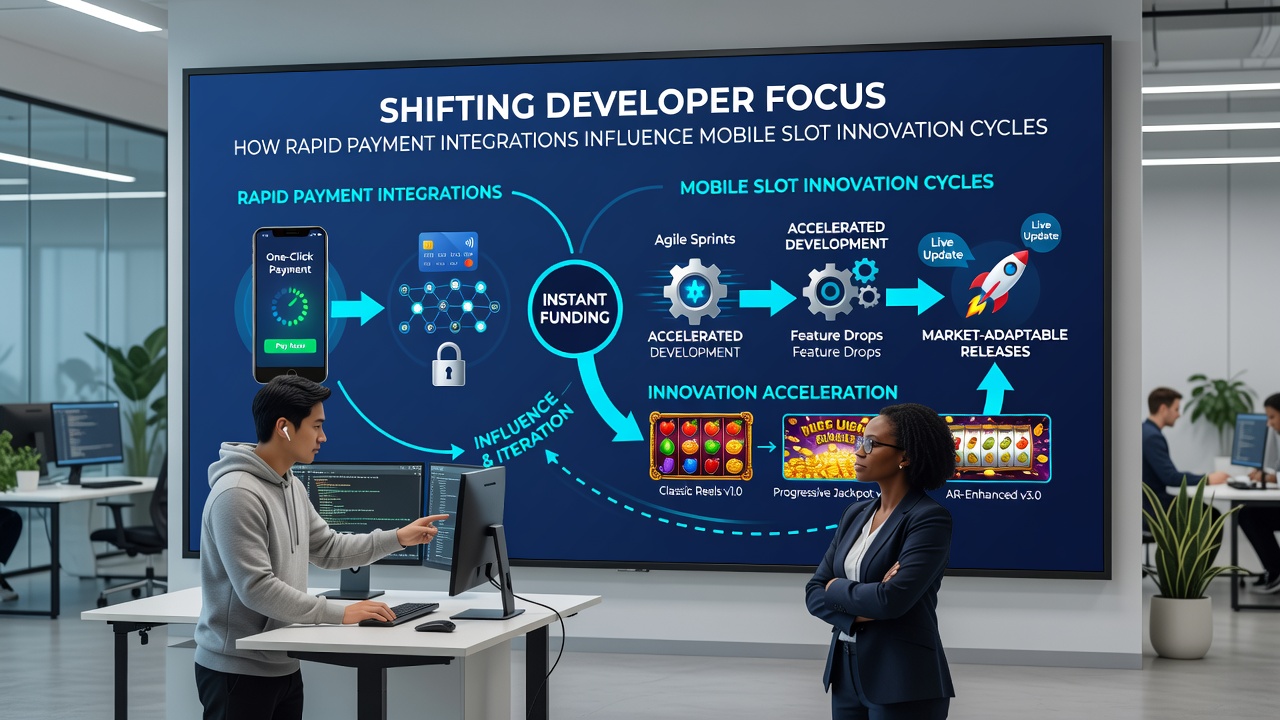
Payment systems that process deposits and withdrawals in seconds have altered the way mobile slot studios schedule their production cycles and assign engineering teams. Data from industry reports show that studios now complete integration projects with digital wallets and instant funding services in weeks rather than months, freeing up developers who previously spent extended periods on compliance testing and backend reconciliation. Those time savings translate directly into shorter intervals between new game releases, as teams redirect hours once spent on payment infrastructure toward feature experimentation and mathematics model refinement.
Integration Timelines and Development Cadence
Research conducted by the Canadian Gaming Association indicates that average integration periods for instant deposit methods dropped by 42 percent between 2023 and 2025 across major mobile platforms. Developers who once maintained separate queues for payment certification now embed those tasks within the same sprint cycles used for reel mechanics and bonus triggers. The result appears in release calendars that list four to six new titles per quarter instead of the two or three that characterized earlier schedules. Observers note that smaller studios in particular have accelerated their output because they can license pre-certified payment modules rather than building custom connections from scratch.
Resource Reallocation Patterns
Engineering hours previously dedicated to transaction logging and anti-fraud rule updates now shift toward volatility tuning and progressive jackpot network connections. A 2025 study from the University of Nevada Gaming Innovation Lab documented that studios reporting the fastest payment adoption also recorded the highest percentage of staff time allocated to live data analytics features. Teams monitor session length and bet distribution in real time, then adjust reel weights or bonus frequency within days of initial deployment. This feedback loop compresses the traditional six-month testing window into iterative updates that reach players while a title remains in its launch window.
Regional Regulatory Influences on Speed
Regulatory frameworks in multiple jurisdictions have supported these compressed timelines by accepting standardized API documentation from payment providers. Figures released by iGaming Ontario in early 2026 reveal that approved wallet integrations increased by 67 percent year-over-year, coinciding with a measurable uptick in mobile slot submissions. Developers cite the availability of shared compliance checklists as a factor that reduces duplicated effort across markets. At the same time, studios operating in jurisdictions with stricter identity verification rules continue to maintain dedicated compliance subgroups, illustrating that payment speed gains remain uneven depending on local requirements.
Feature Prioritization and Data Feedback
Instant settlement capabilities supply developers with immediate session data that informs decisions about bonus structures and volatility settings. When players can reload balances without leaving the game interface, studios observe higher engagement with high-volatility options that previously saw lower take-up rates. One analysis of European operator data from the first half of 2026 showed a 19 percent rise in average bet size on titles supporting seamless top-ups compared with those requiring account navigation. Developers respond by embedding more granular control over bet sizing and auto-play parameters, features that require additional front-end work but deliver measurable retention improvements.
Impact on Third-Party Provider Partnerships
Payment aggregators that offer plug-and-play modules have become standard partners for slot studios seeking to shorten time-to-market. Contracts now frequently include performance clauses tied to release frequency rather than solely to transaction volume. This contractual evolution encourages providers to maintain up-to-date certification libraries across multiple regulatory zones, reducing the coordination burden on development teams. In June 2026 several aggregators announced expanded coverage for emerging markets in Latin America, where local banking APIs had previously required lengthy custom work. The announcements coincided with three major slot releases that incorporated region-specific payment flows from day one.
Conclusion
Payment integration velocity continues to influence how mobile slot developers sequence projects and distribute internal resources. Shorter certification windows and standardized modules allow studios to cycle through more titles annually while incorporating real-time performance data into ongoing updates. Regional differences in verification rules create variation in the pace of change, yet the overall direction points toward tighter coupling between transaction systems and creative development priorities. Future cycles will likely see further compression as more jurisdictions align on shared technical standards and as additional studios adopt modular payment architectures.