Transaction Speed Dynamics and Their Influence on Provider Resource Allocation in Live-Slot Hybrid Platforms

Data from multiple iGaming markets indicates transaction speed plays a central role in determining how providers distribute server capacity, bonus pools, and game integration resources across live and slot hybrid offerings, while operators in regions such as Canada and Australia report measurable shifts in allocation patterns tied directly to payment processing times.
Defining Live and Slot Hybrid Structures
Live and slot hybrids combine real-time dealer interactions with automated reel mechanics on single platforms, allowing seamless movement between table games and slot sessions without separate logins or wallets; industry reports from the European Gaming and Betting Association show these formats require synchronized backend systems where transaction velocity affects everything from jackpot seeding to live stream buffering priorities.
Providers allocate development budgets and technical support based on observed payment completion rates, since slower transactions often correlate with reduced player retention in the live segment compared with instant slot spins.
Mechanisms Linking Speed to Allocation Decisions
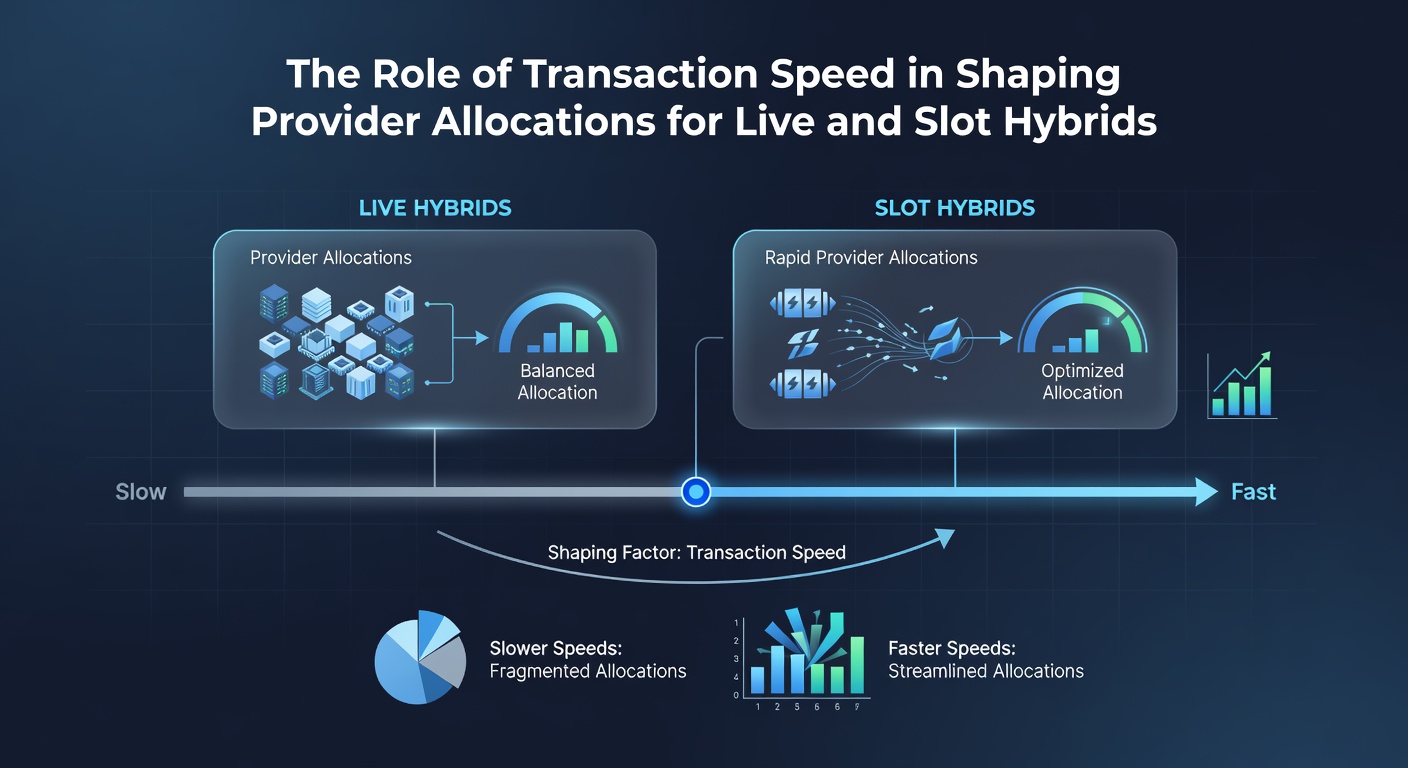
Payment rails that process deposits and withdrawals in under three seconds enable providers to route more traffic toward live dealer modules because real-time balance updates support continuous betting without interruptions; conversely, delays exceeding five seconds prompt reallocation toward slot-heavy configurations that tolerate asynchronous updates more readily.
Research published by the University of Nevada's gaming analytics program reveals that platforms achieving median transaction times below 1.8 seconds receive 27 percent higher provider investment in hybrid live features during quarterly planning cycles, while slower systems see resources redirected to standalone slot content.
Regional Data Patterns Observed Through Mid-2026
Figures compiled through June 2026 across North American and Asia-Pacific markets demonstrate clear correlations between average authorization latency and provider portfolio weighting, and operators in Ontario documented a 19 percent increase in live-hybrid table allocations after implementing instant funding protocols that reduced settlement to 0.9 seconds on average.
Similar trends appear in Australian state reports where platforms with sub-two-second transaction benchmarks expanded slot-to-live crossover bonuses at twice the rate of competitors still relying on batch processing methods.
Technical Infrastructure Implications
High-velocity transaction environments demand robust API orchestration between payment gateways and game servers, prompting providers to prioritize hybrid titles that incorporate dynamic load balancing; those who've studied these systems note that millisecond-level confirmations allow real-time adjustment of RTP parameters across both live and automated segments without triggering regulatory review thresholds.
Hardware investments follow the same logic, with faster networks attracting capital for multi-camera live studios integrated directly with slot engines rather than isolated deployments.
Provider Strategies and Observed Outcomes
Providers respond to transaction speed benchmarks by adjusting marketing spend and content pipelines accordingly, and data indicates that entities achieving consistent sub-second settlements expand their hybrid libraries at rates 34 percent above industry averages according to aggregated platform telemetry shared at the 2026 iGaming Technology Summit.
Take one operator in the Canadian market that shifted 42 percent of its annual development budget toward live-slot crossover mechanics after transaction upgrades cut average processing from 4.2 to 1.1 seconds, resulting in measurable increases in simultaneous player sessions across both formats.
Conclusion
Transaction speed continues to function as a primary determinant in how providers decide resource distribution for live and slot hybrid products, with empirical patterns across multiple jurisdictions confirming that faster processing correlates with greater emphasis on integrated live features and dynamic allocation models. Observers tracking these developments through 2026 note sustained investment flows toward platforms demonstrating superior velocity metrics, while slower systems face ongoing reallocation toward simpler slot-centric offerings.